
2026 Winter Program
Course List · January 6 – 23, 2026
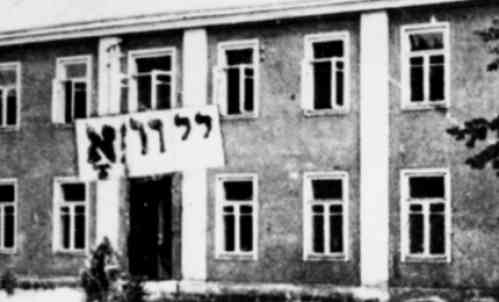
An Open Ghetto Next Door to Treblinka
Instructor: Elżbieta Janicka
A 17th-century Jewish town, a wartime border town, then an open ghetto and one of the six residual ghettos established by the Nazis in the Warsaw District, Kosów Lacki was located 7 kilometers in a straight line from the Treblinka death camp, and it hides in the shadow of Treblinka to this day.
We will begin our investigation with a historical outline of Jewish Kosów, pointing out and trying to interpret the blind spots in the historical record. We will then try to discern individual biographies against the background of the collective trajectory of Kosów Jews.
The question of the outside will be crucial in elucidating the concept of the open ghetto. What did the Kosów Lacki area look like – spatially, socially and culturally? How might its landscape have served as both a place of shelter and an instrument of murder, and how were Poles positioned to use it? What did the “hunt for Jews” (Judenjagd) in the town and its surroundings look like, and was justice eventually served through postwar prosecution and post-1989 historical reckoning?
To place our reflection into context, we will examine the phenomenon of the ghetto as such and the deep entrenchment of this antisemitic invention of the papal authority throughout Christian Europe. While deciphering the physical topography of Kosów Lacki, where the natural intertwines with the cultural, we will consider it in a longue durée perspective. Additionally, we will study the prewar, wartime and postwar symbolic topography of the town to determine whether the patterns organizing it have evolved over time.
Our overall reasoning will be guided by two questions: what kind of a challenge does the open ghetto phenomenon represent for the periodization and the conceptualization of the Holocaust, and what can field research bring to the topic more than 80 years later?
Two Revolutionaries
Instructor: Jonathan Brent
Totalitarian regimes evolve from the inside and the outside, from the inner dynamics of societies in decline, and from the imposition of ideologies from without. As opposed to the historical pattern Marx envisioned, the 1917 Bolshevik revolution took place during a period of precipitous social disorganization, producing widespread psychological and moral disorientation accompanied by extremist ideologies. These revolutions were not the product of the evolution but of the de-evolution of the social-political order. The systems that replaced this order were intent, therefore, not simply on building on past accomplishments, but on rebuilding amid conditions of social chaos and ambiguity.
I.N. Steinberg and Victor Serge recount the process of this disintegration and rebuilding in ways most appropriate to study today as societies around the world have turned to totalitarian or proto-totalitarian solutions to current social and political problems. We will read Steinberg’s memoir In the Workshop of the Revolution, a deeply personal, brilliant account of the revolution and the evolution of the doomed Soviet experiment, as well as Serge’s Memoirs of a Revolutionary, 1901-1941, perhaps his greatest work, which provides unique—often astonishing—insights into the times in which he lived and the movements for which he fought. Their visions of a just and equitable world in a time of extremism and crisis are especially valuable today.
However, the great value of these works is the insight they provide into the psychology of the revolutionaries and the masses which made the Revolution possible.
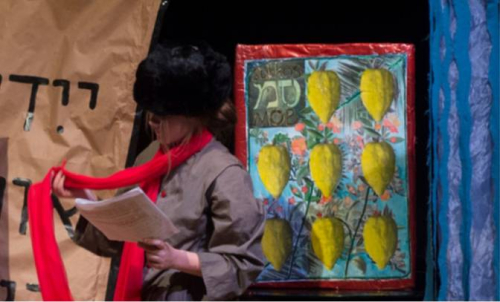
The Wandering Jew in Yiddish Literature
Instructor: Anita Norich
Where do Jews belong? Where have they been, or where should they be? What changes when Jews emigrate, or move from village or shtetl to cities? Such questions have been at the center of Yiddish literature and Jewish thought. For some writers, Zionism offered an obvious answer. For others, it was doikeyt—“hereness”—the belief that Jews should improve their lot in the countries in which they live. Still others saw emigration as the only solution to “the Jewish problem.” Reading literary texts (in English translation, but also available in Yiddish for those who wish to use them), we will consider where Yiddish writers have imagined a place for themselves and for the Jewish people. We’ll consider works by such writers as Sh.Y. Abramovitch, Sholem Aleichem, Dovid Bergelson, Yankev Glatshteyn, Chaim Grade, Anna Margolin, Kadya Molodovsky, and I.J. Singer.
The Jews of Mexico
Instructor: Ilan Stavans
Since their first arrival as conversos with the Spanish army in the early 16th century, Mexico has become a center of different Jewish religious, ideological, ethnic, and cultural traditions. Sephardim, Ottomans, Ashkenazim, Communists, Shoah survivors, Hasidim, and Israelis, among others, coexist. The course explores their parallel immigration patterns, the contributions they have made to numerous realms, the antisemitism they face, and the identity they have shaped. Discussion will include languages like Yiddish, Ladino, Spanish, Hebrew, and English, personalities such as Luis de Carvajal the Younger, Isaac Berliner, Jacobo Glantz, Diego Rivera, Frida Kahlo, Gloria Gervitz, Rosa Nissán, Miriam Moscona, Angelina Muniz-Huberman, and the current president Claudia Sheinbaum. Participants will delve into the political, social, religious, and cultural landscape through stories, poems, essays, letters, art and photography, as well as recipes, songs, liturgy, etc.
American Jews, Communism, and Espionage
Instructor: Harvey Klehr
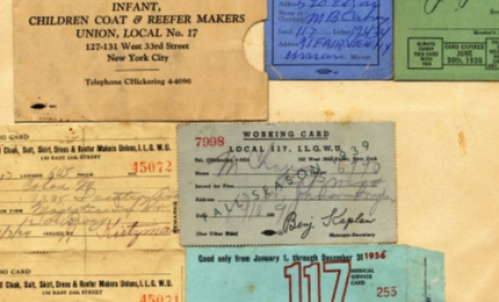
The relationship between American Jews and communism has long been a sensitive subject. Because Jews were overrepresented in the CPUSA, antisemites have frequently tarred them as subversive and un-American. That, in turn, raised Jewish fears when the Red Scare began in the late 1940s and many of those accused of being Soviet spies were Jewish.
This course will address these issues, beginning with the fraught relationship between Jews and the founders of the communist movement in Europe. It was an ideology that attracted large numbers of Jews and equally determined opposition from large sectors of the Jewish community–including many attracted to socialist ideas. The creation of the state of Israel intensified the Soviet Union’s hostility to Zionism and frequently morphed into antisemitism.
When the United States and the Soviet Union became antagonists after the end of World War II, the prominent role Jews played in the CPUSA became a major concern for mainstream Jewish organizations which feared that it would lead to a surge in antisemitism. That fear was heightened by the trial and execution of Julius and Ethel Rosenberg in 1953 after their conviction for conspiring to steal atomic secrets, and the simultaneous exposure of widespread Soviet espionage directed against the United States that included a disproportionate number of Jews. Despite these fears and Joseph McCarthy’s crusade against communist spies, it did not lead to a spike in antisemitism.
We will examine these issues from a variety of perspectives and, where appropriate, draw some parallels to issues of antisemitism and Anti-Zionism today. For each class the instructor will suggest some short reading and offer some longer readings that participants might want to pursue on their own. Each session will typically begin with a lecture, but we will leave time for questions, discussion, and reflections.
Émigré Jews and Film Noir
Instructor: J. Hoberman
Largely working under the radar, German and Austrian Jewish emigres like Robert Siodmak and Edgar G. Ulmer introduced a classic Hollywood style of the 1940s while the children of Jewish immigrants, Jules Dassin and Abraham Polonsky (both later blacklisted for their Communist affiliations), helped politicize it. The course will focus on individual films—including Siodmak’s Phantom Lady (1944), Ulmer’s Detour (1945) and Polonsky’s Force of Evil (1948)—as well as the backstories of their writer/directors. It is up to students to decide in what way, if at all, the films are Jewish and their makers Jews.
The Shtetl
Instructor: Samuel Kassow
Through historical readings and various Yiddish stories in translation, this course will study the shtetl, those largely Jewish market towns in eastern Europe. While the “imagined shtetl” has played an outsized role in Jewish popular culture—Fiddler on the Roof being just one example—the real shtetl was a complex community that had an enormous impact on Jewish life over the centuries. Readings will include selections from Sholom Aleichem, Mendele Mocher Seforim, Itche Meir Weissenberg, and other Yiddish authors, as well as some actual memoirs of shtetl life.
Jews and Revolution
Instructor: Tony Michels
For more than a century, the Russian Revolution has commanded the attention of Jews around the globe. In the eyes of its admirers, the “Soviet experiment” had liberated workers, women, and national minorities from ancient oppressions. It had registered great achievements in the realms of culture and education and proved that rational economic planning was possible. To its detractors, the Bolshevik party-state had produced economic chaos and a totalitarian bureaucracy. It had quashed workers’ liberty, artistic and intellectual creativity, and all forms of individuality. The one thing observers could agree on was the fact that the revolution’s significance extended far beyond Russia. This course will explore the ways in which Jews in the United States and Russia engaged with revolutionary ideologies and political movements during the first half of the twentieth century. We will consider a variety of historical documents—polemics, reportage, autobiographies, party programs, etc.—representing multiple political perspectives.
Photography and Jewishness
Instructor: Maya Benton
The question, “What is Jewish Art?" has been debated by art historians and Jewish studies scholars for centuries. In recent decades, scholars and curators have noted the preponderance of Jewish photographers who have shaped the medium. Over that same period, arts institutions have increasingly foregrounded the ethnicity and cultural specificity of artists as a lens through which to understand their work, yet Jewish historiography – including forced exile and migration and the role that it plays in shaping the lives and work of photographers - has been avoided or omitted from exhibitions, biographies, and discussions of artists’ work. How does the role of Jewish biography and Jewish identity shape our understanding of the work of Jewish photographers?
In each of these six sessions, we will explore the unique contribution of Jews who shaped the history and medium of photography, including the practice of image-making, the role of exile and migration in the transmission of modernism, the establishment of photo agencies, and the dissemination of images as visual activism. We will also explore the role of Jewish family photographs in storytelling.
Through illustrated presentations and lively class discussions, topics will include: Jewish photographers who fought fascism with their cameras during the Spanish Civil War including Gerda Taro, Chim, and Robert Capa; Holocaust images, including Lee Miller and Margaret Bourke-White's photographs of the liberation of concentration camps; Roman Vishniac's images of Jewish life in 1930s Central and Eastern Europe; Jewish women photographers in Weimar Germany and interwar Europe; the role that Jewish immigrants played in shaping Latin American modernism; Jewish photographers who turned their lenses on their own families and as self-portraiture; iconic images of the American Civil Rights Movement made by Jewish photographers including Freedman, Robert Frank, Leonard Freed, Danny Lyon, and Gillian Laub; vernacular photography, family albums, and the imagined future of a Vernacular Jewish Photography Archive; and an introduction of several of the most significant photographers and video artists working in Israel today. The role (and absence) of non-Ashkenazi photo histories – for example, the largely unexplored but widely circulated postcard images of North African Jewish women from the 1890s-1920s – will also be discussed.
Readings and will include historical and recent attempts to answer the question, “Why are so many of the great photographers Jewish?” and “Is there such a thing as a Jewish photograph?” or, as some have claimed, a "Jewish sensibility" in photography? Renowned photographers and scholars will join several class discussions to share their work throughout the sessions. In addition to readings, links to online exhibitions, archives, and artists’ websites, as well as a wide range of award-winning documentary films, will be assigned as optional supplements to the reading.